Focus Is the New Oil — and Big Tech Already Owns the Refinery
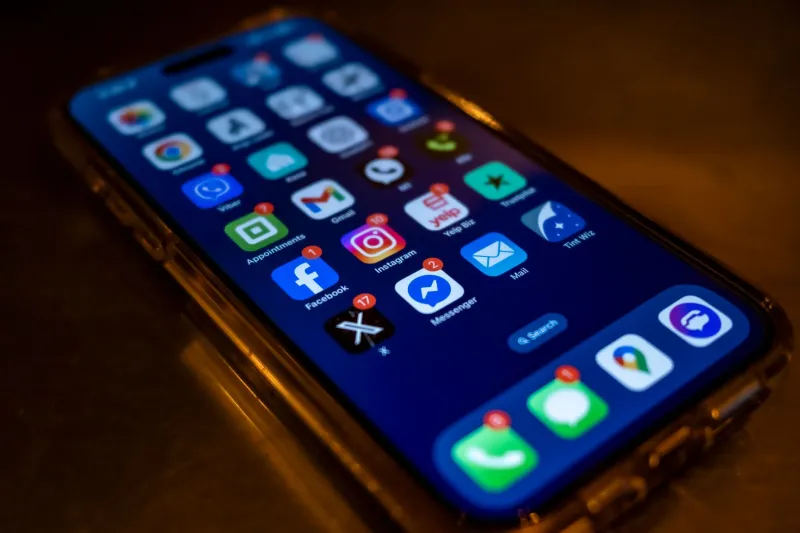
There's a running joke in certain corners of tech Twitter — sorry, X — that goes something like this: the most powerful computer on earth is sitting in your skull, and you're letting a dopamine-optimized rectangle rent it out by the millisecond. Funny. Also kind of horrifying. Also, increasingly, just true.
We're living through what researchers and a growing number of cognitive scientists are starting to call an attention recession — a systemic, society-wide depletion of sustained human focus. And unlike the economic kind, this one doesn't show up in quarterly reports. It shows up in the middle of a sentence you can't finish, a conversation you half-heard, a book chapter you've re-read three times and still can't summarize.
What's Actually Being Taken From You
Let's get specific, because vague hand-wringing about "too much screen time" doesn't cut it anymore. What's happening is architectural.
Every major platform you use — Instagram, TikTok, YouTube, LinkedIn, your email client, your news aggregator — runs on engagement-maximization algorithms. These systems aren't designed to inform you or entertain you in any complete sense. They're designed to keep your eyes on the screen for one more second, then one more after that. The content is almost incidental. The slot machine mechanic is the product.
Now layer on top of that the explosion of AI-generated content. Generative tools can now produce thousands of pieces of scroll-stopping material per day at near-zero cost. The supply of attention-grabbing stimuli has gone parabolic while the amount of human attention available has stayed exactly the same — roughly 16 waking hours per person, per day. Basic supply and demand. Your focus is getting cheaper to capture and more expensive to reclaim.
And then there's the notification layer. The average American knowledge worker receives somewhere between 50 and 100 notifications daily across devices. Each ping doesn't just interrupt a thought — according to research out of UC Irvine, it takes an average of 23 minutes to return to a state of deep focus after an interruption. Do that math. For a lot of people, uninterrupted deep work has become structurally impossible on a normal workday.
The Fragmentation Economy
Here's the part that should genuinely unsettle you: this isn't a bug. It's the business model.
Attention, once captured, gets packaged and sold. Advertisers don't buy your eyeballs in bulk anymore — they buy microsegmented slices of your cognitive state. Angry you, curious you, bored-at-2am you, anxious-about-your-retirement you. Each emotional register has a dollar value attached to it. The platforms know which content reliably produces which state, and they serve it accordingly.
This is what makes the current moment different from earlier eras of media distraction. Television competed for your attention. The modern attention economy commodifies the attention itself — breaks it into units, assigns it a price, and trades it on an open market. You're not the audience anymore. You're the inventory.
The downstream effects are starting to look genuinely alarming. A 2023 survey by Microsoft found that 68% of workers say they don't have enough uninterrupted focus time during the workday. Separate research suggests that heavy social media users show measurable reductions in their ability to sustain attention on single tasks — not because their brains are damaged, but because they've been systematically trained to switch contexts every few seconds. The brain is plastic. It adapts to whatever environment you put it in. Right now, we're training an entire generation of human minds to be maximally distractible.
Attention Poverty Is a Class Issue
Something that doesn't get said loudly enough: the attention recession hits differently depending on your zip code and your bank account.
Knowledge workers with the resources and flexibility to set their own schedules are increasingly investing in what some are calling cognitive hygiene — structured offline time, notification blackouts, analog workflows, even purpose-built "dumb phones" that strip away everything except calls and texts. The market for focus-preserving tools is booming. Apps like Freedom and Opal, which block distracting sites at the OS level, have seen subscriber growth spike year over year. "Digital minimalism" has gone from a niche philosophy to a legitimate lifestyle category with its own product ecosystem.
But for hourly workers, service employees, gig economy participants — people who can't set their own schedules or opt out of always-on communication — there's no escape hatch. They're fully exposed to the attention extraction machine with none of the countermeasures. That gap is widening, and it has real consequences for cognitive health, mental wellness, and economic mobility.
What Early Adopters Are Actually Doing
The tech-forward crowd isn't waiting for a regulatory fix. They're building workarounds, some more scalable than others.
Time-blocking with AI assist is having a serious moment. Tools like Reclaim.ai and Motion use machine learning to automatically schedule deep work sessions around your calendar commitments, creating protected focus blocks that meetings can't eat. The irony of using AI to defend you from AI-powered distraction is not lost on anyone, but it's working for a lot of people.
Async-first communication norms are spreading through startups and remote teams. Companies like GitLab and Basecamp have long championed the idea that most communication doesn't need to happen in real time — and that defaulting to synchronous chat is one of the biggest productivity killers in modern work culture. More teams are formalizing these norms explicitly rather than leaving communication expectations implicit.
Wearable biofeedback is another frontier worth watching. Devices that track heart rate variability, cortisol proxies, and even EEG signals are getting cheap and accurate enough for consumer use. The next generation of these tools promises to tell you not just when you're distracted, but what triggered the distraction and how long recovery took. Quantified focus, essentially — the same way the quantified self movement brought data to sleep and fitness.
The Deeper Question
All of these are individual solutions to what is fundamentally a structural problem. And that's worth sitting with.
When clean water became scarce in certain communities, we didn't solve it by telling people to drink less. We recognized it as a public health crisis requiring systemic intervention. There's a growing argument — still minority, still contested — that attention deserves the same framing. That the cognitive commons is being enclosed by private interests, and that treating it as purely a personal responsibility issue lets the actual architects of the crisis off the hook entirely.
Some researchers are pushing for what they call attentional rights — legal protections around notification frequency, algorithmic transparency requirements, and design standards that prohibit the most manipulative engagement mechanics. It's early days for that conversation in the US, especially given the current regulatory climate around tech. But it's happening.
In the meantime, the platforms keep optimizing. The AI content engines keep spinning. And somewhere in the back of your mind, behind the notification badge and the unread count and the autoplay queue, there's a version of you that used to be able to read a whole article without checking your phone.
You just did, by the way. Notice how that felt.