Live Forever or Die Trying: Inside the Billionaire Bet on Mind Uploading
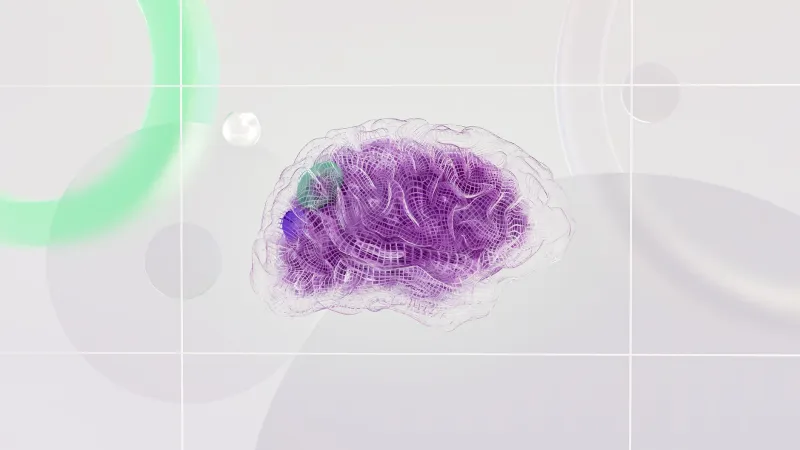
Somewhere in a lab that probably has very good espresso and absolutely zero natural light, a researcher is trying to figure out how to turn your brain into a file. Not a metaphor. An actual file — something that could theoretically be stored, copied, maybe even run on hardware that doesn't age, doesn't get cancer, and definitely doesn't need health insurance.
This is the world of whole brain emulation, or mind uploading, and it has quietly become one of the most funded, most debated, and most genuinely strange corners of tech. The people bankrolling it aren't fringe characters. They're the same names attached to rockets, social networks, and self-driving cars. And they're dead serious.
The Basic Pitch (and Why It's Harder Than It Sounds)
The core idea isn't new. Philosophers have been poking at questions of consciousness and continuity for centuries. What's changed is that a handful of well-capitalized optimists now believe the engineering timeline is actually visible — not tomorrow, but not science fiction either.
The rough roadmap goes something like this: scan a brain at sufficient resolution to capture every neuron and synaptic connection, translate that structural map into a working computational model, and then run that model on a substrate that isn't biological. The result, theoretically, would be a version of you — your memories, personality quirks, opinions about pineapple on pizza — existing in digital form.
Nectome, a Y Combinator-backed startup, drew headlines a few years back for developing a preservation technique that could keep brain tissue intact at nanoscale resolution. The catch? The process is lethal. You'd need to be euthanized first. They had a waitlist anyway. That tells you something about both human mortality anxiety and the persuasive power of a good pitch deck.
Other labs are taking less terminal approaches. The Allen Institute for Brain Science has been building detailed maps of neural connectivity. Kernel, founded by Bryan Johnson — yes, the same guy doing experimental self-optimization protocols on himself — has developed non-invasive brain scanning hardware aimed at reading neural activity with unprecedented fidelity. The pieces are being assembled, even if nobody has the full picture yet.
The Copy Problem Nobody Wants to Talk About
Here's where it gets philosophically uncomfortable, and where even the most enthusiastic proponents tend to get quiet.
Suppose the technology works perfectly. A complete, accurate digital model of your brain is created and switched on. It wakes up. It has your memories of your first apartment, your complicated feelings about your dad, your specific way of laughing too loud at your own jokes. It believes, completely and without any doubt, that it is you.
But is it?
If the original biological you still exists at the moment the upload is activated, most people's intuition says no — that's a copy, not a continuation. The philosophical term is the "teleportation problem," and it's been a thought experiment staple for decades. If a machine disassembles you in New York and reassembles you in Los Angeles from new atoms, did you travel, or did you die and a replica wake up on the West Coast?
Mind uploading sharpens that question to a point. The digital version might be experientially identical to you in every measurable way. It might grieve the same losses and love the same people. But the unresolved question — whether subjective experience, the actual feeling of being alive, transfers or simply gets replicated — is one that no amount of compute power has answered yet. Neuroscience doesn't even have consensus on what generates consciousness in the first place.
Some researchers, like philosopher and cognitive scientist David Chalmers, have argued that a sufficiently detailed emulation would genuinely be conscious — a real mind, not a philosophical zombie. Others think that's a category error dressed up in optimism. The honest answer is that we don't know, and anyone telling you otherwise is selling something.
When Immortality Has a Price Tag
Set aside the hard problem of consciousness for a second and assume the tech works exactly as advertised. Someone uploads successfully. They persist. They're effectively immortal, or at least as immortal as the servers keeping them running.
Now ask the next question: who gets to do this first?
The current trajectory of mind uploading research is almost entirely funded by people who are already extraordinarily wealthy. That's not a conspiracy — it's just how early-stage moonshot science gets financed in America. But it means the first viable iterations of this technology, if they arrive, will almost certainly be priced at a level accessible to a very small slice of the population.
We've seen this pattern before. Early gene therapies cost millions per treatment. The first commercially viable electric vehicles were luxury cars. Experimental longevity treatments are currently marketed to people who can afford $40,000 annual memberships at boutique clinics. There's usually a trickle-down arc, but it takes time — sometimes generations.
With mind uploading, the stakes of that delay feel different. We're not talking about a better drug or a faster car. We're talking about the possibility of one class of people simply not dying while everyone else continues to do so on schedule. The social and political implications of that asymmetry are genuinely difficult to model. Inherited wealth already compounds across generations. Imagine if the wealthy themselves never had to hand anything down.
What the True Believers Actually Believe
Spend enough time reading through the literature — the papers, the blog posts, the conference talks — and a particular worldview starts to emerge among the most committed advocates. It's not purely mercenary. Many of the researchers and funders in this space are motivated by something that reads more like grief than greed.
They watched parents or partners decline. They felt the specific helplessness of watching a person's personality erode before their body gave out. They became, in some fundamental way, unable to accept that this is just how things are. The technology is downstream of the refusal.
There's something recognizably human in that. The desire to not lose the people you love — or to not be lost yourself — is about as universal as motivations get. The question is whether the solution being built actually delivers on the promise, or whether it creates something new that merely wears the face of the thing you were trying to save.
The Version of You That Wakes Up
If mind uploading ever becomes real, the most important conversation won't be about the technology. It'll be about what we decide it means.
Does a digital mind have legal personhood? Can it own property, vote, enter contracts? What happens when it wants to make a copy of itself — is that reproduction or piracy? If it suffers, do we have obligations to it? If it can be deleted, is that murder?
These aren't hypotheticals to be filed away for later. The decisions made in the early stages of any transformative technology tend to calcify into norms and laws that are very hard to undo. The internet is a pretty good case study in what happens when you build the infrastructure before you build the ethics.
The billionaires betting on mind uploading are, at minimum, forcing a conversation that probably needed to happen anyway. Mortality is the universal constraint that every human life is built around. What happens to culture, meaning, and motivation in a world where that constraint becomes optional — for some — is a question worth taking seriously now, while there's still time to think it through.
Because if the technology actually arrives, the window for careful deliberation is going to close very, very fast.