Your Memories Are Worth Money. Someone's Already Building the Exchange.
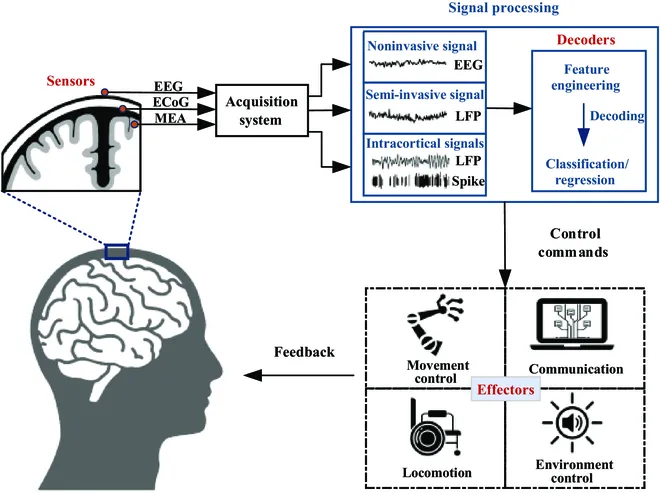
Photo: YUANRUI DONG, SHIRONG WANG, QIANG HUANG, RUNE W. BERG, GUANGHUI LI, AND JIPING HE, CC BY 4.0, via Wikimedia Commons
Imagine selling the memory of your first Radiohead concert—not a video, not a playlist, but the actual felt experience. The smell of the venue, the specific emotional weight of hearing "Fake Plastic Trees" for the first time in a crowd of strangers. Now imagine someone else buying it, loading it up like a file, and living it as their own.
That sounds like a Philip K. Dick premise. It's increasingly looking like a business model.
The Tech Is Closer Than You Think
Consumer neural interfaces are no longer purely theoretical. Companies like Neuralink, Synchron, and a growing cluster of smaller startups are racing to make brain-computer interfaces accessible outside clinical settings. Most current applications focus on motor control and accessibility — helping paralyzed patients communicate, for example. But the underlying architecture required to record neural states is advancing in parallel, and researchers in labs from MIT to Stanford are working on what they call "episodic memory encoding" — the ability to capture, store, and theoretically replay the neural patterns associated with specific experiences.
We're not at plug-and-play yet. But the trajectory is clear enough that economists, ethicists, and a new breed of tech entrepreneur are already war-gaming what comes next.
"The moment you can reliably encode an experience with enough fidelity to make it transferable, you've created an asset class," says one venture-backed founder working in the neural data space who asked not to be named due to ongoing fundraising. "And asset classes always find markets."
What Would a Memory Actually Sell For?
The speculative economy around tradeable experiences is still largely theoretical, but it's not without precedent. NFTs proved that people will pay real money for digital provenance — the idea of owning something unique. Memory trading would take that logic and inject it with something far more potent: authenticity of lived experience.
Think about the categories that would immediately have market value. Milestone moments — a Super Bowl seen from the field, a backstage pass at Coachella, the view from the summit of Everest — would command obvious premiums. But the more interesting (and troubling) territory is in the intimate and personal. First loves. Childhood summers. The feeling of holding a newborn child when you've never had one.
Some researchers studying the intersection of memory science and digital economics have started calling this "nostalgia futures" — a framework where the emotional intensity of an experience, combined with its scarcity and cultural resonance, determines its market price. A war veteran's memory of V-E Day, if it could be encoded, would theoretically be priceless. A perfectly average Tuesday? Not so much.
"We already commodify attention, we commodify emotion through advertising, we commodify personal data," says Dr. Priya Anand, a bioethicist at a major research university who has written about neural privacy. "Memory trading isn't a rupture from where we are. It's the logical endpoint of a road we've been on for twenty years."
The Legal Void Nobody's Ready For
Here's the uncomfortable reality: the legal infrastructure for any of this doesn't exist. Not even close.
Current US law doesn't recognize neural data as a protected category in most states — though Illinois and California have taken early steps toward biometric data protections. There is no federal framework for memory ownership, no precedent for what happens when a purchased experience causes psychological harm, and no clear answer to the question of whether you can truly consent to having your most private mental states turned into downloadable content.
The intellectual property questions alone are staggering. If you attend a private concert and encode the memory, does the artist have a claim to the neural recording of their performance? If you sell the memory of your wedding, does your spouse have co-ownership rights? If a traumatic memory is sold and causes harm to the buyer, who bears liability?
"The courts aren't going to be ready for this," says Marcus Webb, a tech attorney who specializes in emerging digital property rights. "We can barely handle deepfakes. Memory commerce would require us to answer questions about personhood and ownership that philosophy hasn't fully resolved, let alone the law."
Early Adopters Are Already Experimenting at the Edges
Despite the regulatory vacuum, a small but vocal community of biohackers and neural interface enthusiasts is already exploring the conceptual frontier. In forums and Discord servers, users trade theories about what a memory marketplace might look like, debate the ethics of experience tourism, and share early experiments with consumer EEG devices that, while nowhere near true episodic encoding, represent the outermost edge of accessible neural tech.
Jordan, a 29-year-old software developer in Austin who runs one of the larger neural-tech hobbyist communities online, frames it in terms that feel both idealistic and unsettling. "The way I see it, the most valuable thing any person has is their lived experience. Their perspective. Right now that dies with them. If we could actually preserve and share that, it's not just a market — it's a kind of immortality."
But critics push back hard on that framing. The immortality argument, they say, obscures who actually benefits from commodifying memory. In a market economy, the experiences most likely to fetch high prices are those of the already privileged — people who've had access to rare, expensive, or culturally significant moments. Memory trading, without serious structural guardrails, could become another mechanism for concentrating experiential wealth.
"Rich people would be able to sell their extraordinary lives for additional income," notes Dr. Anand. "And everyone else would be buying secondhand versions of experiences they were already priced out of having directly. That's not democratization. That's a new kind of class system."
The Consent Problem Nobody Wants to Talk About
There's a dimension to this conversation that makes even enthusiastic technologists go quiet: the consent problem in intimate memories.
Any memory involving another person raises immediate ethical red flags. Romantic experiences, family moments, private conversations — these involve people who never agreed to have their presence in your memory turned into a product. The technical ability to extract and sell such a memory would represent a profound violation of the other parties involved, one that current privacy law has no vocabulary for.
This is the piece that keeps ethicists up at night more than the market mechanics. Not whether the technology will arrive — most believe it will — but whether society will develop the ethical and legal reflexes to manage it before the market outruns the guardrails.
Where This Goes From Here
Memory trading isn't happening tomorrow. The technical hurdles remain significant, and the gap between current neural interface capabilities and true episodic encoding is still measured in years, possibly decades. But the conversation is happening now, in research labs, in legal white papers, in venture capital back channels, and in the kind of speculative online communities that have a habit of being right about things before the mainstream catches up.
The smarter question isn't whether your memories will eventually have a market value. It's whether you'll have any say in how that value is set — and who gets to keep the proceeds.
If history is any guide, the answer depends entirely on whether the people asking hard questions get there before the people building the exchange.