Before Your Best Friend Notices, the Algorithm Already Has: The Rise of Machines That Know When You're Breaking
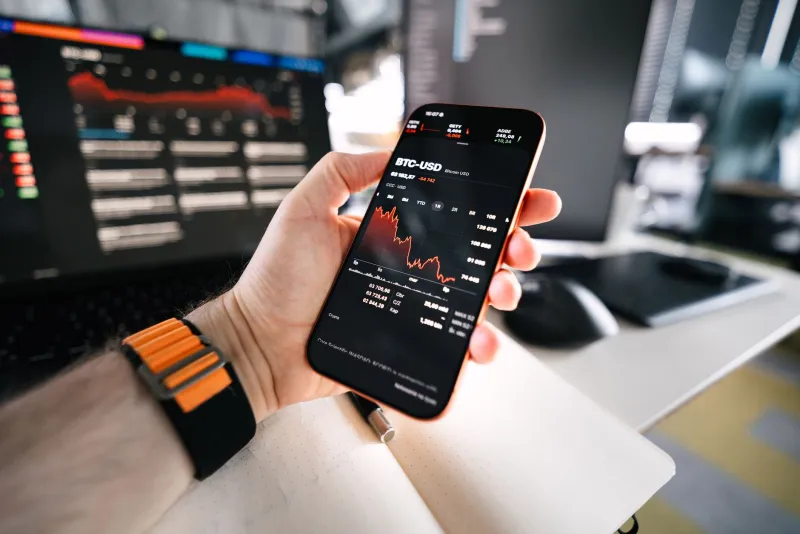
There's a version of this story that sounds like science fiction. An app on your phone silently monitors the way you type, the hours you sleep, how often you cancel plans, how long you stare at a screen without moving — and then, before you've said a word to anyone, it flags you as a person in crisis. A notification goes out. Help arrives.
Except that version isn't science fiction anymore. It's a product roadmap.
Researchers at places like MIT, Stanford, and a growing cluster of health-tech startups have spent the better part of a decade building machine learning models that can detect early-stage depression, anxiety spirals, and even suicidal ideation by analyzing the digital exhaust we generate every single day. And the accuracy rates are getting uncomfortable — in a good way, maybe, but also in a way that should make you stop and think about who exactly is doing the detecting, and what they plan to do with what they find.
The Data You Didn't Know You Were Giving Away
Here's what your phone already knows about your mental state: your sleep patterns (thanks to screen-on times and charging habits), your social withdrawal (declining calendar invites, fewer outgoing texts, longer gaps between replies), your movement patterns (location data showing you haven't left the apartment in four days), and even your emotional tone (sentiment analysis running quietly on the messages you type into apps).
Individually, none of these signals means much. Together, weighted and cross-referenced against population-level behavioral data, they start to paint a picture that's surprisingly accurate. A 2021 study published in NPJ Digital Medicine found that passive smartphone data alone could predict depressive episodes with roughly 80% accuracy — without users ever answering a single mental health questionnaire.
That number has only climbed since.
Some of the most sophisticated models now layer in voice analysis (detecting flatness or agitation in recorded calls), typing cadence (slower, more erratic keystrokes correlate with cognitive load and emotional distress), and even micro-expressions captured by front-facing cameras. The picture being assembled isn't just behavioral — it's physiological.
The Case For Letting the Machine Watch
Before we get into the part that should unsettle you, let's be honest about the part that genuinely matters: people are dying because mental health crises go undetected.
In the US, suicide remains one of the leading causes of death for people between 10 and 34. The gap between when someone begins to struggle and when they actually receive help averages somewhere between 8 and 10 years. That's not a system failure — it's a systemic collapse. Friends miss the signs. Family members don't know what to look for. Therapists only see patients for an hour a week, if that.
If a machine can close that gap — if it can catch the warning signs that even the people who love you most are trained to overlook — that's not dystopia. That's a genuine lifeline.
Some crisis intervention tools are already operating in this space. Crisis Text Line has used machine learning for years to triage incoming messages and identify the highest-risk conversations. Several university wellness programs have piloted opt-in apps that monitor student behavior and alert counselors when someone's patterns shift dramatically. Early results are promising enough that the NIH has poured significant funding into expanding these trials.
The Part Where It Gets Complicated
Here's the problem: the same capabilities that could save lives in a carefully designed, consent-forward mental health context are extraordinarily valuable in a dozen other contexts where your wellbeing is not the priority.
An insurance company that knows you're entering a depressive episode has a financial incentive to act on that information before you do. An employer monitoring remote workers could flag emotional distress as a productivity risk. An advertiser — and this one's already happening in various forms — can target you with specific content precisely when you're most emotionally vulnerable, most likely to seek connection, most susceptible to persuasion.
The infrastructure for emotional surveillance is being built right now, largely by companies whose primary obligation is to shareholders, not users. The mental health framing is real, but it's also convenient cover for something much broader: the construction of a psychological profile so detailed that it can predict not just your breaking point, but your buying decisions, your political opinions, and your capacity for resistance.
That's not paranoia. That's the business model.
Who Owns Your Emotional Data?
Right now in the US, mental health data occupies a strange legal gray zone. HIPAA protections apply to data generated in clinical settings, but most of the behavioral data being harvested by consumer apps doesn't qualify. Your fitness tracker's sleep data isn't a medical record. Your texting patterns aren't protected health information. The sentiment analysis running on your social media posts exists in a regulatory vacuum.
Some states are starting to push back — California's data privacy laws are the most aggressive in the country, and there's been increasing congressional interest in mental health data specifically — but the legislation is moving at the speed of government while the technology moves at the speed of venture capital.
In the absence of federal protection, the most important safeguard most people have is the terms of service they never read.
What Comes Next
The trajectory here is pretty clear. These models are going to get better, faster, and cheaper. The data pipelines feeding them are going to get richer. And the gap between what your loved ones can perceive about your mental state and what an algorithm can infer is going to keep widening.
That creates a genuine fork in the road. One path leads to a world where early detection tools are developed with robust consent frameworks, transparent data practices, and genuine accountability — where the machine watching you is working for you. The other leads somewhere darker: a world where your most private psychological vulnerabilities are a commodity, bought and sold in data markets you'll never have access to.
The technology itself isn't the villain here. The question is who controls it, who profits from it, and whether the people being watched ever get a real say in how the data is used.
Your friends might not notice when you're starting to unravel. The algorithm definitely will. The only thing left to figure out is what it does with that information — and whether you had any choice in the matter.