Scroll Companions: How Your Feed Fills the Room With Strangers You'll Never Actually Know
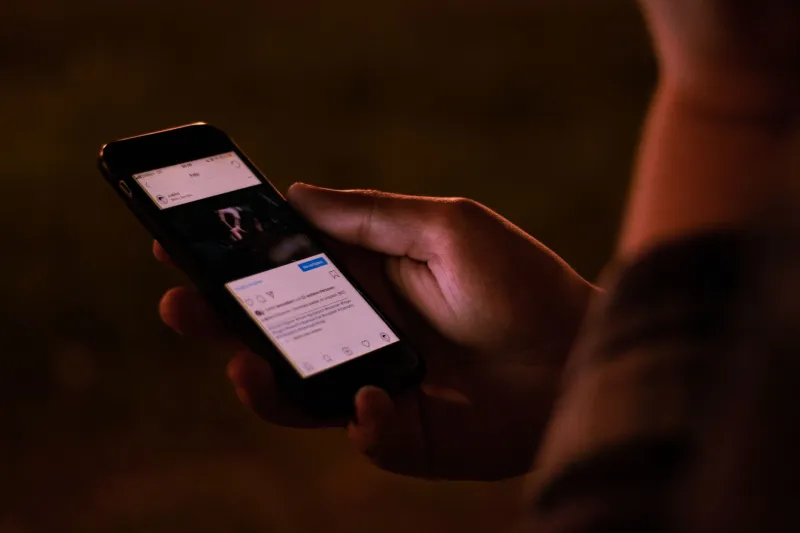
There's a specific kind of hollow feeling that hits around 11 p.m. on a Tuesday. You've been scrolling for forty minutes. You've watched a guy in Vermont build a timber-frame cabin from scratch. You've followed along as a woman in Austin documented her entire sourdough journey across seventeen reels. You've orbited a tight-knit group of amateur astronomers in New Mexico who clearly love each other and meet every month under genuinely dark skies. And you feel, somehow, more alone than when you started.
That's not a coincidence. And it's not entirely your fault.
The Feed Knows What Keeps You Watching
Modern recommendation engines aren't built to make you happy. They're built to keep you present — engaged, scrolling, returning. The metric that matters is time-on-platform, and the content that wins that metric tends to be aspirational, emotionally resonant, and just socially close enough to feel personal without actually requiring anything from you.
Dr. Pamela Rutledge, director of the Media Psychology Research Center, has spent years studying how people form parasocial relationships — those one-sided emotional bonds we develop with people who don't know we exist. "Algorithms are essentially parasocial relationship machines," she told a conference audience in 2023. "They surface the exact type of content that triggers attachment behaviors, and they do it with a precision that no human programmer sat down and explicitly designed. It emerged from the optimization process itself."
That last part is the uncomfortable truth. Nobody at a major platform held a meeting and said, let's make people feel lonely. The loneliness is a byproduct — a side effect of chasing engagement at industrial scale.
Designed for the Edge of the Circle
Here's how the mechanics work, roughly. Platforms track not just what you click, but how long you hover, whether you rewatch, whether you screenshot, whether you visit a profile repeatedly without following. These micro-signals build a model of your desires — including your social desires. The system learns that you respond to a certain kind of warmth, a certain aesthetic of belonging. It learns that friend groups and tight communities generate strong emotional responses in you.
So it feeds you more of those. Not membership in them. Just proximity.
You become a permanent spectator at someone else's campfire. The algorithm puts you close enough to feel the heat but never hands you a seat.
Researchers at the University of Pennsylvania published findings in 2022 suggesting that heavy social media use was correlated not just with loneliness but with a specific flavor of it — what they called social comparison loneliness, the feeling that arises not from absence of people but from abundance of people who seem more connected than you are. The feed doesn't show you empty rooms. It shows you full ones that you're not in.
The Niche Community Trap
One of the more insidious patterns is what some researchers have started calling the niche community loop. You discover a micro-community — say, people who restore vintage hi-fi equipment, or a corner of the internet obsessed with a very specific style of urban gardening. The content is warm, the people seem genuine, the comment sections feel like a neighborhood bar.
But you're watching through a window. The algorithm has no incentive to push you toward actually joining. Joining would mean leaving the platform, or at least reducing your passive consumption. Your engagement with the content about the community is more valuable than your participation in the community itself.
"There's a real difference between being adjacent to a community and being inside one," says Dr. Jeremy Bailenson, founding director of Stanford's Virtual Human Interaction Lab. "Platforms monetize adjacency. Actual belonging is harder to quantify and harder to keep people coming back for."
The result is a generation of people who are fluent in dozens of subcultures — who know the lingo, follow the aesthetics, could pass a casual quiz — but who belong, deeply, to very few of them.
Bug or Feature?
The honest answer is: probably both, depending on who you ask inside these companies.
From a pure product standpoint, a user who feels a mild, unresolved social hunger is a user who keeps opening the app. Satiation is bad for retention. If you found genuine, fulfilling community through a platform, you might not need to scroll anymore. You'd just go hang out with your people.
That's not a conspiracy. It's just incentive structures doing what incentive structures do.
But there are people inside these organizations — researchers, ethicists, some product managers — who are genuinely troubled by the data. Internal studies at multiple major platforms have reportedly shown that certain recommendation patterns correlate with increased feelings of social isolation in users, particularly in the 18-to-34 demographic. Whether those findings have changed product decisions in any meaningful way is, charitably, unclear.
What's less ambiguous is the scale. We're talking about systems that shape the social perception of hundreds of millions of Americans every single day. The average US adult now spends somewhere between two and four hours on social platforms daily. That's a significant portion of a person's felt social life being curated by an optimization function that has never once been asked to optimize for genuine connection.
What Would a Different Design Look Like?
Some researchers and designers are starting to ask that question seriously. What if a recommendation system were explicitly penalized for generating parasocial attachment without providing pathways to real interaction? What if platforms surfaced local communities — people you could actually meet — with the same aggression they currently apply to aspirational strangers?
A handful of smaller platforms have experimented with this. Meetup has always leaned toward IRL conversion. Some newer apps in the social discovery space are building recommendation logic that explicitly tries to close the loop between watching and participating. The results are mixed but interesting.
The challenge is that genuine connection is messier, slower, and less dopaminergic than watching a charismatic stranger's perfectly edited life. The algorithm knows what you'll click on. It doesn't always know what will actually make you feel less alone at 11 p.m. on a Tuesday.
The Scroll Isn't Neutral
None of this means you should delete your apps or that the people you follow aren't real or valuable in some sense. Parasocial relationships have genuine psychological benefits — they can reduce anxiety, model social behavior, provide comfort during hard periods. That's not nothing.
But it's worth holding the full picture: the feed is not a passive reflection of what you want. It's an active shaping force, tuned to keep you engaged, and one of its most effective tools is the careful, calibrated presentation of belonging that stays just out of reach.
The future of social technology doesn't have to work this way. Some of the most interesting design thinking happening right now is explicitly trying to build systems that close the gap — that treat human connection as the product rather than the bait.
Until that future arrives, though, it might be worth asking who exactly is sitting around that campfire you keep watching — and whether the algorithm ever actually intended to let you in.