Green Futures That Don't Suck: How Solarpunk Became Silicon Valley's Unlikely Blueprint
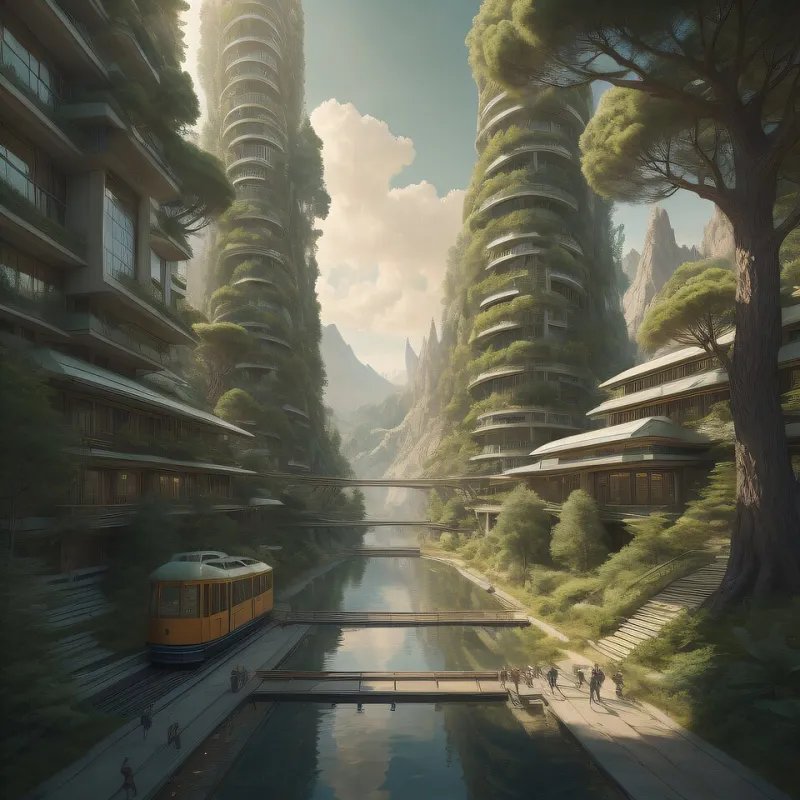
Photo: Prototyperspective, CC0, via Wikimedia Commons
Somewhere between the techno-dystopian hellscapes that dominate prestige TV and the relentless "move fast and break things" energy of traditional startup culture, a different kind of future has been quietly taking shape. It's got solar panels draped over living rooftops, community mesh networks, open-source hardware, and a stubborn insistence that abundance and sustainability aren't mutually exclusive. It's called solarpunk, and it's having a moment that goes way beyond aesthetics.
This isn't a trend piece about cottagecore for engineers. This is about a genuine shift in how some of the most interesting builders in tech are thinking about what they're building—and why.
Wait, What Even Is Solarpunk?
If you've never encountered the term, here's the quick version: solarpunk is a cultural movement—part aesthetic, part political philosophy, part speculative fiction genre—that imagines a future where humanity has figured out how to live sustainably without sacrificing creativity, community, or joy. Think lush vertical gardens integrated into urban architecture, decentralized energy grids powered by renewables, cooperative technology ownership, and a general vibe that the apocalypse is not, in fact, inevitable.
It emerged organically online in the early 2010s, largely in writing communities and on platforms like Tumblr, as a conscious counterpoint to the grimdark futures dominating science fiction at the time. Where cyberpunk gave us neon-soaked corporate dystopias and climate fiction gave us drowning coastlines, solarpunk said: what if we imagined getting it right instead?
For years, it stayed mostly in the realm of art, fiction, and online aesthetics. Then something shifted.
The Moment VC Started Listening
Venture capital has always followed narratives. For a long time, the dominant tech narrative was disruption—move fast, scale faster, worry about externalities later. Climate tech existed on the margins, often dismissed as too slow, too regulated, or too dependent on government subsidies to generate the returns that VC firms require.
That calculus has changed, and solarpunk thinking—even when investors aren't using the word—is part of what's driving it.
The Inflation Reduction Act supercharged domestic clean energy investment in ways that made previously marginal bets suddenly compelling. But beyond the policy tailwind, there's a cultural shift happening among founders and funders who grew up watching climate change accelerate in real time. The dystopian future isn't abstract anymore. And that's making a genuinely optimistic, solutions-forward framework like solarpunk feel less like idealism and more like a competitive advantage.
Firms like Breakthrough Energy Ventures, Lowercarbon Capital, and Congruent Ventures are explicitly backing companies that fit the solarpunk template—not because their partners are posting aesthetic mood boards, but because the underlying thesis is sound: decentralized, resilient, community-scaled technology is more robust than centralized, fragile, growth-at-all-costs systems.
The Startups Building the Solarpunk Stack
So what does solarpunk actually look like when it's incorporated in Delaware and raising a Series A?
Distributed energy is the clearest expression. Companies like Span.IO (smart electrical panels that make home energy management genuinely usable) and Sunrun (residential solar-plus-storage at scale) are building the infrastructure layer of a decentralized grid. The vision isn't just rooftop solar—it's homes and neighborhoods that generate, store, and share energy peer-to-peer, reducing dependence on centralized utilities that have proven brittle in the face of extreme weather events.
Biomimetic architecture is getting serious funding. Firms like Terrapin Bright Green and startups working on living building materials are pushing construction toward designs that work with natural systems rather than against them. This is very literally the solarpunk aesthetic made structural—buildings that breathe, filter air, and generate energy as integrated functions rather than afterthoughts.
Community mesh networks and local-first software represent the digital infrastructure side of the movement. Projects building on protocols that prioritize local data storage, offline functionality, and user ownership of data are gaining traction—both as products and as philosophical statements about what the internet could look like if we made different choices.
Agri-tech with a cooperative twist. Companies like Apicultural and various community-supported agriculture platforms are applying technology to food systems in ways that strengthen local supply chains rather than optimizing them for centralized extraction. That's a very solarpunk impulse dressed up in startup language.
Why the Counternarrative Matters
Here's the opinion part, and I'm not going to pretend otherwise: the stories we tell about the future shape the futures we build.
For the last decade or more, the dominant tech culture narrative has been either utopian in a way that ignores real-world consequences (the early Facebook "connecting the world" era) or dystopian in a way that feels resigned to bad outcomes. Neither of those is a useful map for builders who are actually trying to make things better.
Solarpunk offers something different—a detailed, imaginative, and increasingly technically grounded vision of what better actually looks like. It takes seriously the constraints of physics, ecology, and social dynamics while refusing to accept that those constraints mean we're doomed. That combination of realism and optimism is genuinely rare in both tech culture and mainstream climate discourse.
When founders and designers internalize that framework, it changes what they build. It shifts the questions from "how do we scale this as fast as possible?" to "how do we make this resilient, equitable, and actually good to use for the long term?" Those aren't the same questions, and they don't produce the same products.
What This Means for the Early Adopter
If you're the kind of person who reads FutureVerse, you're probably already making purchasing and investment decisions based on where you think things are going. Here's the signal worth paying attention to: solarpunk isn't a niche aesthetic anymore. It's a coherent set of design principles and technological priorities that is attracting serious money, serious builders, and serious policy support.
The products coming out of this moment—home energy systems, local-first software, regenerative materials, cooperative platforms—are going to look increasingly mainstream over the next five to ten years. Getting familiar with the underlying philosophy now means you'll have a better framework for evaluating what's genuine and what's greenwashing when those products hit the market.
And honestly? In a tech landscape that can feel pretty relentlessly grim, it's kind of nice to have a corner of the innovation world that's genuinely trying to imagine things going well. That's worth paying attention to—not just as a consumer, but as someone who cares about what the future actually feels like to live in.