The City That Practices Tomorrow: Inside America's Simulated Streets

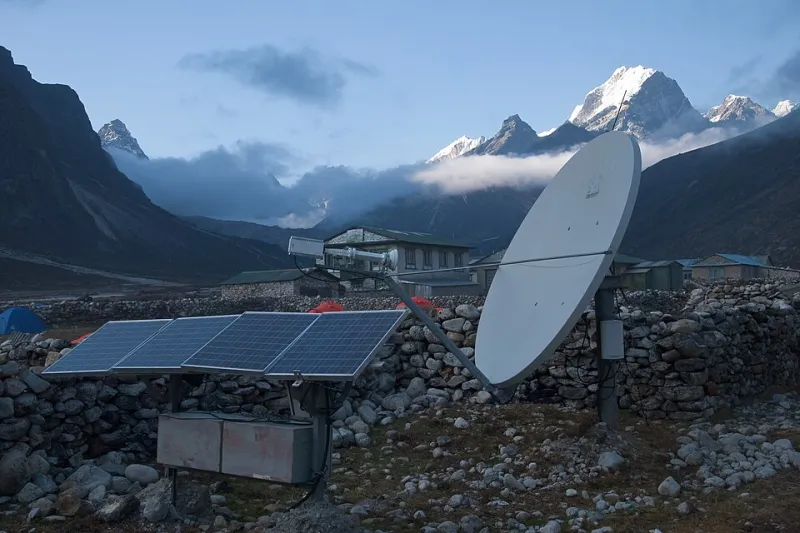
Photo: Stanislav Traykov, CC BY 2.5, via Wikimedia Commons
There's a version of my city where the traffic lights never turn red at midnight and the water main on Fifth Street never burst last February. In that version, the buses run four minutes faster and the flood plain stops two blocks short of the elementary school. That version is a simulation — a live, data-hungry digital twin — and increasingly, it's where the real decisions get made.
What a Digital Twin Actually Is (Minus the Hype)
Strip away the buzzwords and a digital twin is just a city model that never stops updating. Sensors on intersections, utility meters, transit trackers, and public datasets all feed into a 3D environment that mirrors the physical place in near-real time. Planners can then run "what if" scenarios: close this bridge, add a bike lane, rezone that block — and watch the ripple effects play out in minutes instead of years.
Cities like Las Vegas, Orlando, and Phoenix have poured serious money into these systems, and the pitch is genuinely appealing. Why gamble with real lives and real budgets when you can crash-test a policy in software first? It's the same logic that lets airlines train pilots in simulators. Nobody argues with that.
The trouble starts when you ask a simple question: the simulation runs on data, but who decides which data counts?
Governing the Map Instead of the Territory
Here's the scenario that keeps civic technologists up at night. A city official wants to justify cutting a bus route. In the physical city, riders show up to public meetings and say otherwise. In the digital twin, the model — tuned by whatever ridership data the sensors happened to capture — agrees with the cut. The official points at the dashboard. The dashboard is confident. The riders at the podium don't have a render.
This isn't science fiction. It's the quiet drift that happens whenever governance gets mediated by a model. Public comment periods are loud, slow, and inconvenient. A simulation is fast, clean, and authoritative-looking. The gravitational pull toward the second one is enormous.
And the models aren't neutral. Crime prediction data over-policing already showed us what happens when historical bias gets laundered through an algorithm and comes out the other side as "insight." A digital twin inherits every flaw in the data it's fed — then compounds the problem by making those flaws interactive.
The Edit Button Problem
Which brings us to the question almost nobody's asking out loud: who has write access to the twin?
If a private vendor built the simulation — and in most US cities, one did — the city may not fully control its own model. If the underlying data streams come from a telecom or a mobility company, those partners shape what the twin can even see. And if the code is proprietary, a skeptical resident can't audit the thing that's being used to justify decisions about their street, their school, their water.
Democracy was never designed for this. The whole setup assumes the governed and their government are looking at the same reality. Digital twins quietly split that reality in two, and the public only gets to see one half.
A Better Deal for the Simulated Citizen
None of this means cities should scrap the technology. Simulated flood modeling saves homes. Traffic optimization saves time and, honestly, lives. The promise is real.
But if the twin is going to govern, the public needs leverage inside it. That means open data standards, public dashboards showing what scenarios were run and for whom, independent audits of the models, and — this is the big one — a legal right for citizens to challenge a simulation's conclusions the same way they'd challenge a zoning decision.
The version of my city in the twin is getting more accurate every day. The question is whether the version of democracy in the twin is keeping up. Right now, it isn't — and unlike the traffic model, nobody's running a simulation to find out what happens when it fails.