Selling the Self: Inside the Booming Business of Bottling Human Emotion
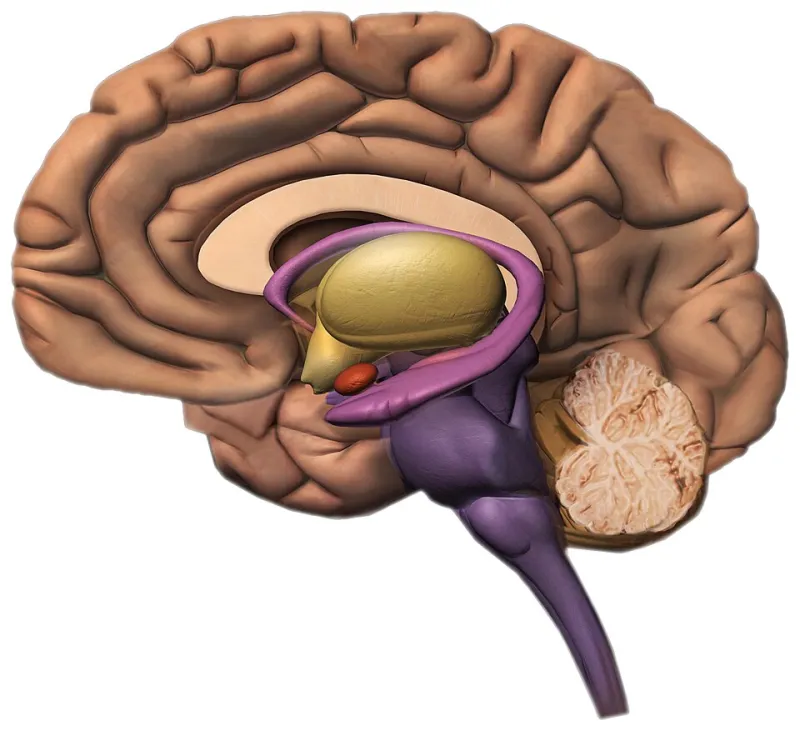
Photo: File:Side View of the Brain.png: National Institute on Aging derivative work: Begoon, Public domain, via Wikimedia Commons
There's a version of the future where you strap on a headset, relive your wedding day in photorealistic 3D, and then — almost without noticing — that memory gets quietly packaged, anonymized, and sold to a brand trying to understand what human joy actually feels like. That future isn't science fiction. It's a pitch deck circulating in Silicon Valley right now.
Welcome to the consciousness economy, where your feelings aren't just yours anymore.
What Is Experiential Data, Exactly?
For most of the internet's history, data meant clicks, searches, purchases — the external stuff. Behavioral breadcrumbs. But a new wave of companies is going deeper, chasing what researchers call experiential data: the subjective, internal texture of being a human person. Think emotional states, sensory responses, attention patterns, even the neurological signature of a specific memory.
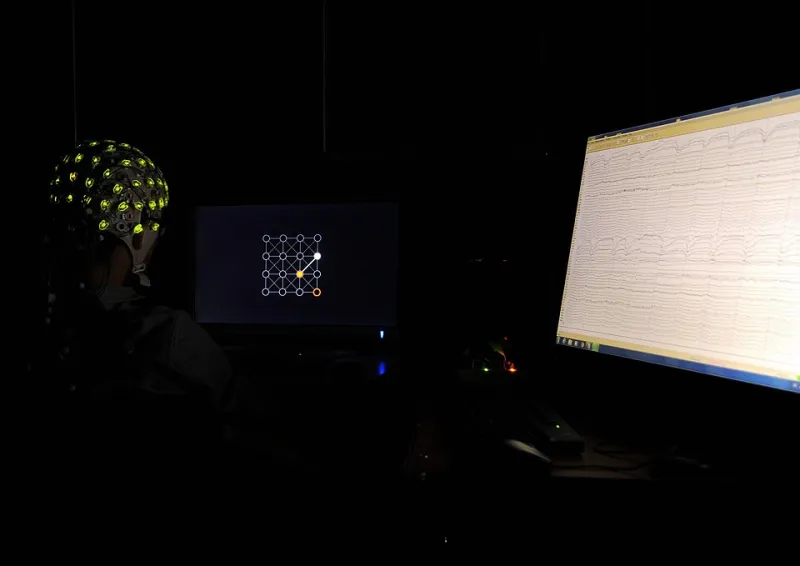
The tools making this possible are converging fast. Wearable biosensors can now detect micro-fluctuations in heart rate variability that correlate with emotional arousal. Advances in EEG headsets — once clunky research equipment — are shrinking into consumer-friendly form factors. Eye-tracking and facial coding software can infer mood states from a webcam feed. And generative AI is getting very good at stitching all of that raw signal into something coherent and commercially useful.
Put it together and you get a system that doesn't just know what you did — it knows how you felt while you were doing it.
The Startups Staking Their Claim
A handful of companies are already planting flags in this territory, and their ambitions are striking.
Emotiv, a San Francisco-based neurotechnology firm, has been selling EEG headsets for years, but its enterprise pivot is telling. The company now offers workplace analytics tools that track cognitive load and emotional engagement — marketed to employers as productivity optimization, but representing a significant expansion of what's considered fair game to monitor.
Hume AI, another US startup, is building what it calls an "empathic AI" layer — software that reads emotional expression from voice and video to make AI interactions feel more human. The flip side? Every interaction trains a model on the emotional data of real people.
And in the metaverse space, companies building avatar-based social platforms are sitting on a goldmine of behavioral and affective data. When your avatar's body language shifts in a virtual meeting, when your attention drifts during a digital concert — those signals are loggable, analyzable, and potentially monetizable in ways that traditional social media never could achieve.
The Ethical Minefield Nobody Wants to Map
Here's where things get genuinely uncomfortable.
Most existing privacy law in the US was written for a world where data meant names, addresses, and credit card numbers. The patchwork of state-level regulations — California's CPRA being the most robust — is only beginning to grapple with biometric data, and almost none of it specifically addresses the emotional or experiential layer.
That gap is enormous. When a company captures your neurological response to a piece of music and uses it to train a recommendation engine, is that a privacy violation? When a VR platform logs the moment you cried during a virtual experience and sells that signal to an advertiser? The law hasn't caught up, and companies know it.
There's also a deeper philosophical problem. Behavioral data, at least, captures things you chose to do. Experiential data captures things you felt — involuntary, intimate, often unconscious responses to the world. The consent frameworks we've built for the former may be wholly inadequate for the latter.
"We're not equipped for this," says one digital rights researcher who has studied the intersection of neurotechnology and data law. "The consent model of 'click agree' was already broken. Applying it to emotional and cognitive data is almost absurd."
Memory as a Tradeable Asset
Perhaps the most unsettling frontier is memory digitization. Several startups — some still in stealth — are working on systems that use a combination of wearable sensors, AI-assisted journaling, and immersive capture to create detailed, navigable records of personal experiences. The pitch to consumers is compelling: never truly forget anything. Relive your daughter's first steps. Revisit a long-gone place.
But the business model underneath that pitch requires those memories to live on servers. And data on servers has a way of becoming an asset.
In the metaverse context, the commercial logic becomes even clearer. If virtual worlds are going to feel genuinely human — if NPCs are going to react authentically, if branded experiences are going to hit the right emotional notes — they need training data drawn from real human experience. Your memories, your joy, your grief: all of it is potentially useful raw material.
So What Do We Actually Do About It?
The good news, if there is any, is that awareness is growing faster than the technology itself. Neurorights advocates, including a coalition pushing for constitutional amendments in several states, are trying to establish legal protections for cognitive liberty and mental privacy before the infrastructure to violate them becomes ubiquitous.
On the consumer side, the move toward local processing — keeping sensitive biometric data on-device rather than in the cloud — offers at least a partial technical safeguard. Some wearable companies are making that a selling point, which suggests the market may eventually reward privacy-preserving design.
But the honest answer is that the consciousness economy is coming whether we're ready or not. The question for early adopters — for anyone paying attention at the edge of what's next — is whether we engage with it critically and shape its norms, or just click agree and find out later what we gave away.
Your inner life is becoming a product category. It's worth deciding now what that's worth to you.